
AI for your business: where do you start?
Start with recurring, time-consuming work whose results you can check. Then decide where AI fits.
Look for these three conditions
Repeated often
Daily searches, similar questions and repeated data entry: identify the step that takes the most time.
Usable information
Product documents, past support cases or business records have known sources, versions and access permissions.
Verifiable results
You can check answers and completed tasks, and record time spent, rework and human intervention.
Prepare for a practical pilot
Choose one workflow
Identify who starts the task, the inputs, the expected result and the points requiring human review.
Bring: a workflow sketchPrepare real examples
Gather anonymized examples of routine tasks, exceptions and cases that are easy to get wrong.
Bring: a source and sample listAgree acceptance criteria
Record current handling time and quality requirements. Compare results on the same tasks before and after introducing AI.
Bring: a baseline and acceptance checklistPrepare a workflow, examples and acceptance criteria. Open each guide for methods and checklists.

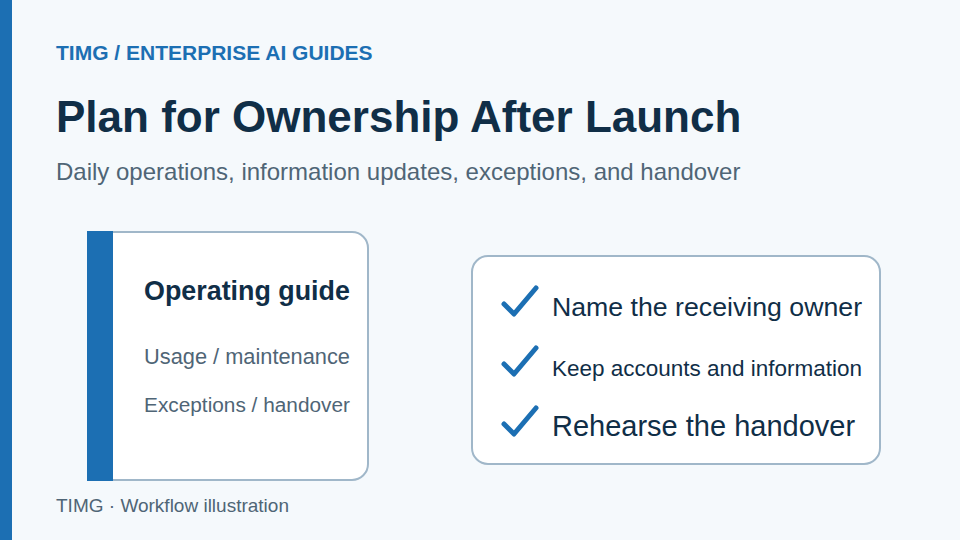
Handing Over an AI Application: Ownership, Operations and Exit Arrangements
Agree on daily operations, exception handling, information updates, and asset handover in advance so someone can use, manage, and adapt the application after the project ends.
Read article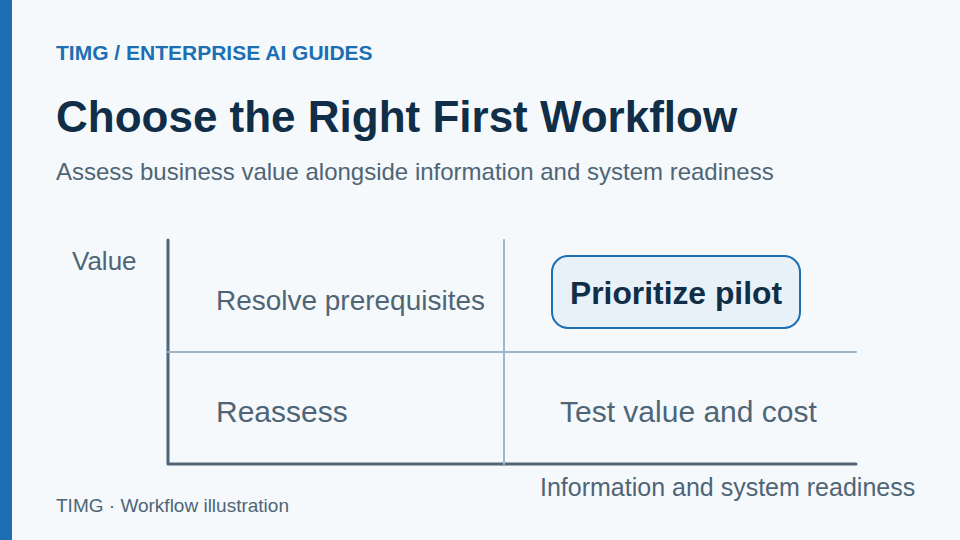
Where to Start with Enterprise AI: Value, Information and Boundaries
Prioritize a pilot by task frequency, workload, information readiness, and accountability, then select a real workflow whose results can be validated.
Read article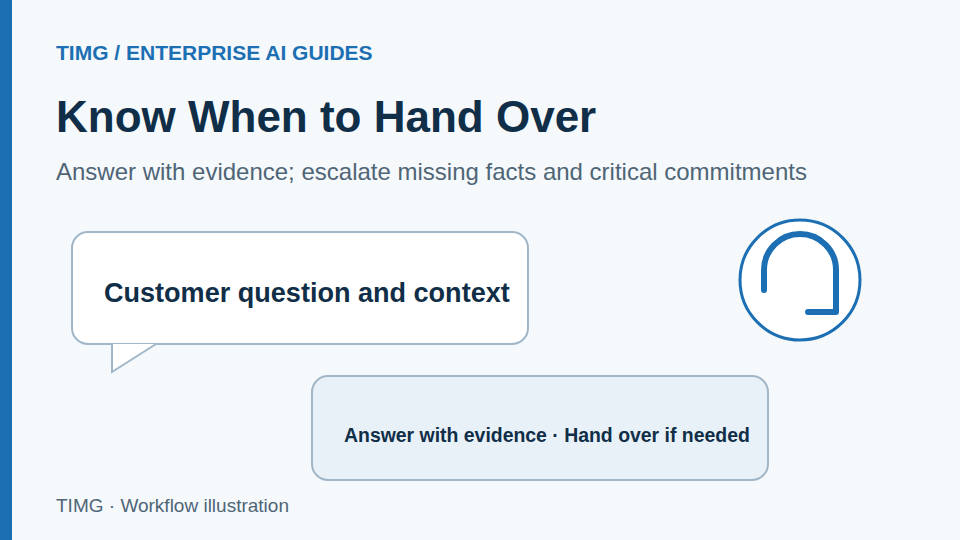
Connecting AI Customer Service to Business Workflows: Knowledge, Permissions and Human Takeover
Follow a customer question through to a business record to see how AI can answer with evidence, act within permissions, and hand complex cases to people.
Read article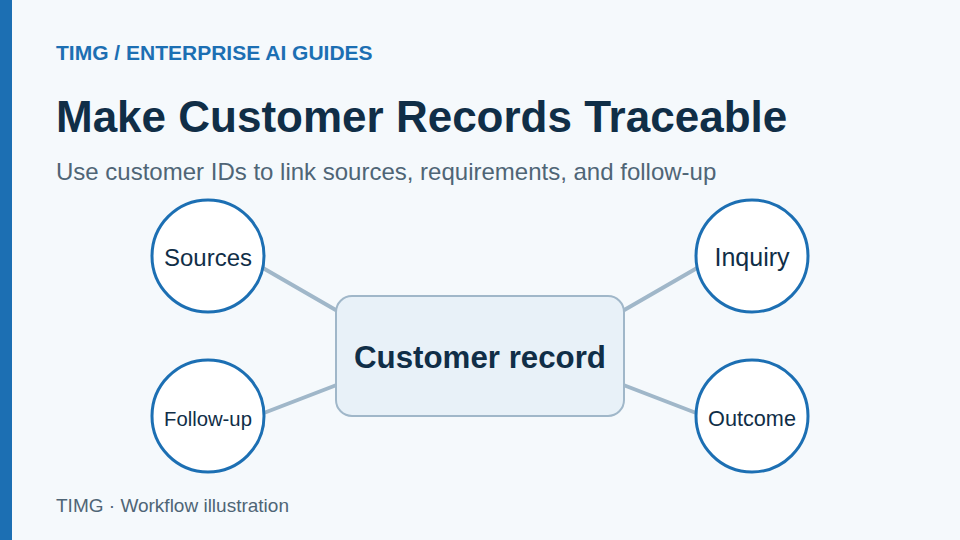
Bringing Customer Information into CRM: From Public Sources to Traceable Records
Connect information sources, matching decisions, duplicate records, and update responsibilities so collected information can actually be used in business.
Read article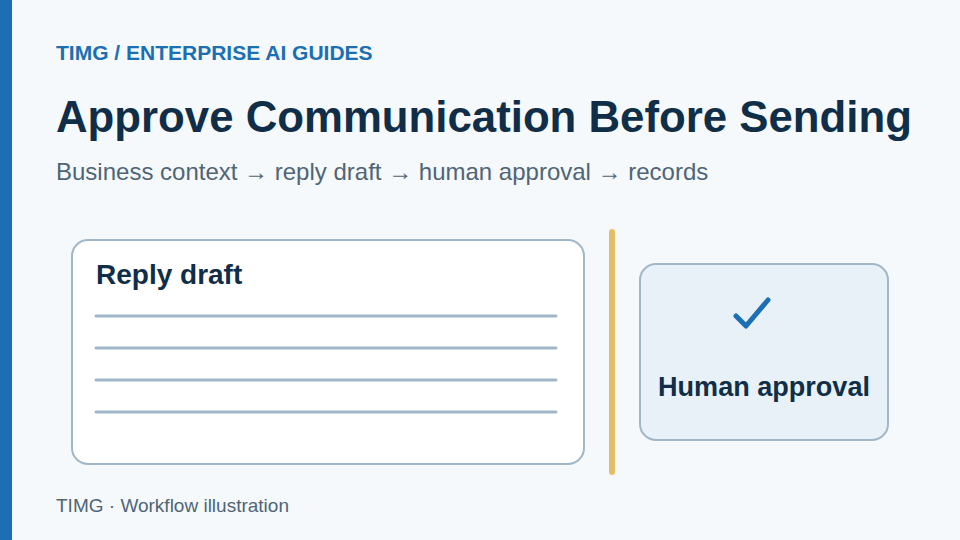
AI-Assisted Business Communication: From Draft to Human Approval
Connect research, drafting, checking, approval, and follow-up records so AI can assist communication while people remain responsible for external commitments and contact strategy.
Read article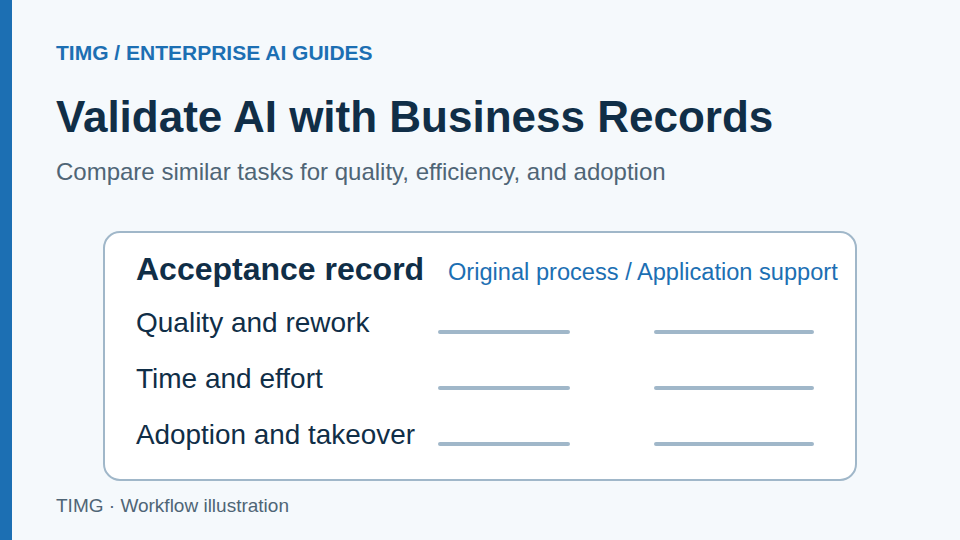
Acceptance Testing for Enterprise AI: Quality, Time and Actual Use
Establish a business baseline, then track quality, processing time, human takeover, and usage so demonstration performance is not mistaken for actual value.
Read article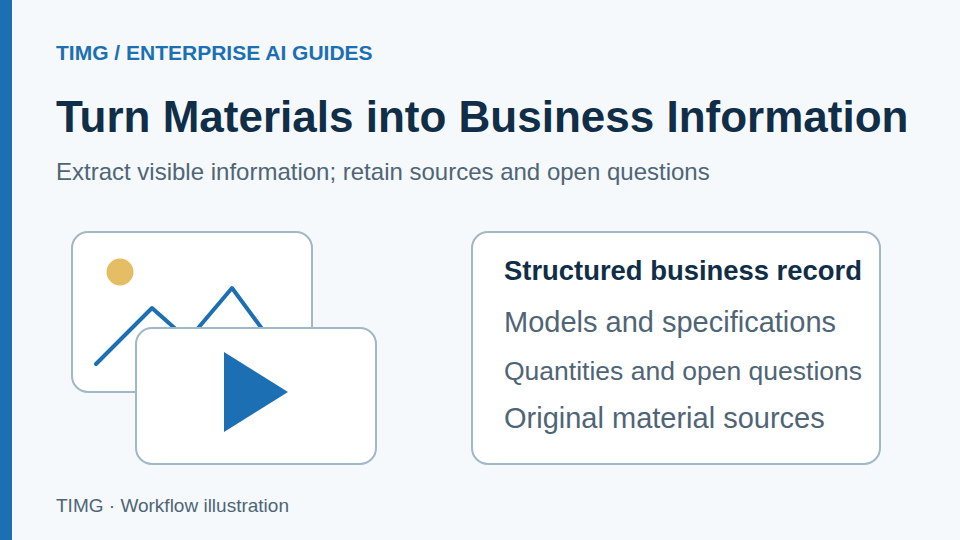
Turning Images, Videos and Documents into Usable Business Information
Before connecting unstructured information to AI, define its sources, extraction scope, and verification method. Lighting product materials illustrate how to turn it into usable business drafts.
Read article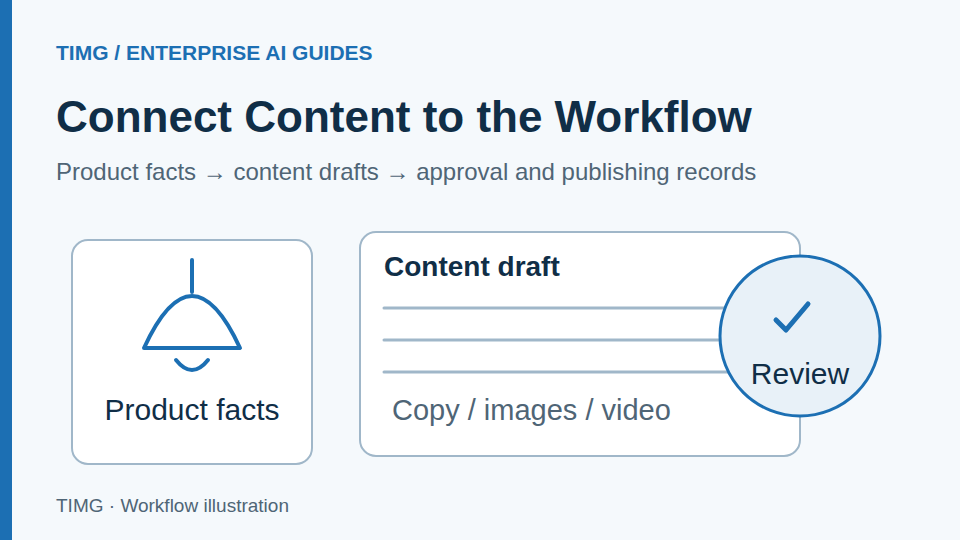
Product Content Workflows: From Fact Checking to Approval and Publishing
Using lighting product information as an example, connect material preparation, content drafts, approval, and publishing records into a sustainable collaborative workflow.
Read article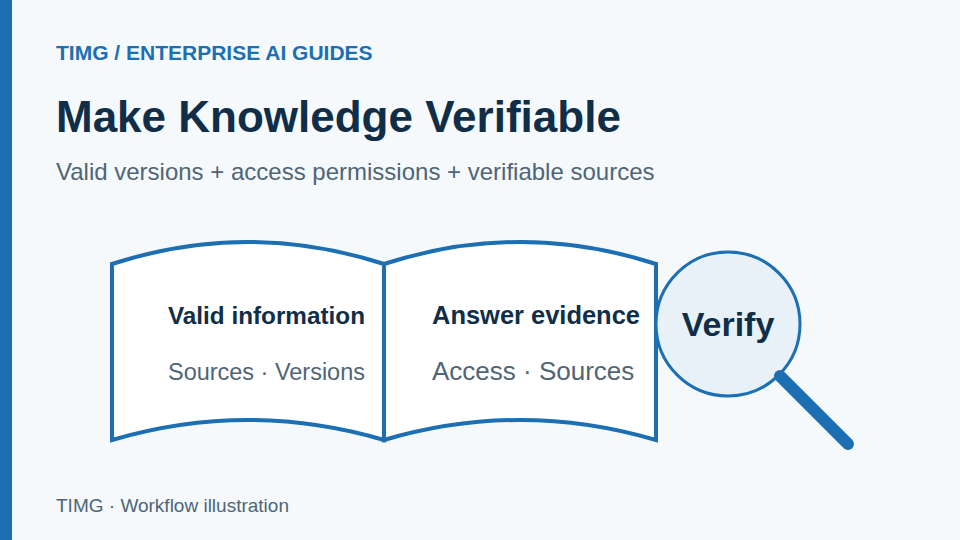
Building a Reliable AI Knowledge Base from Multilingual Business Information
From original sources, versions, and terminology to permissions and supporting evidence, learn how to help AI reference the right information in multilingual business work.
Read article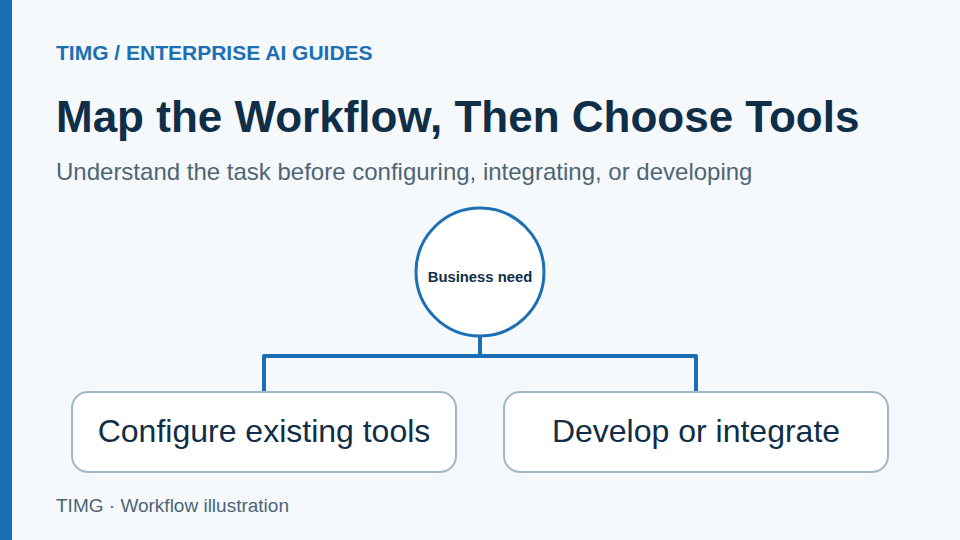
Enterprise AI Projects: Buy Tools First or Map the Workflow?
Assess whether the task is clear, existing tools are sufficient, and systems need to work together to decide whether the next step is configuration, integration, or application development.
Read article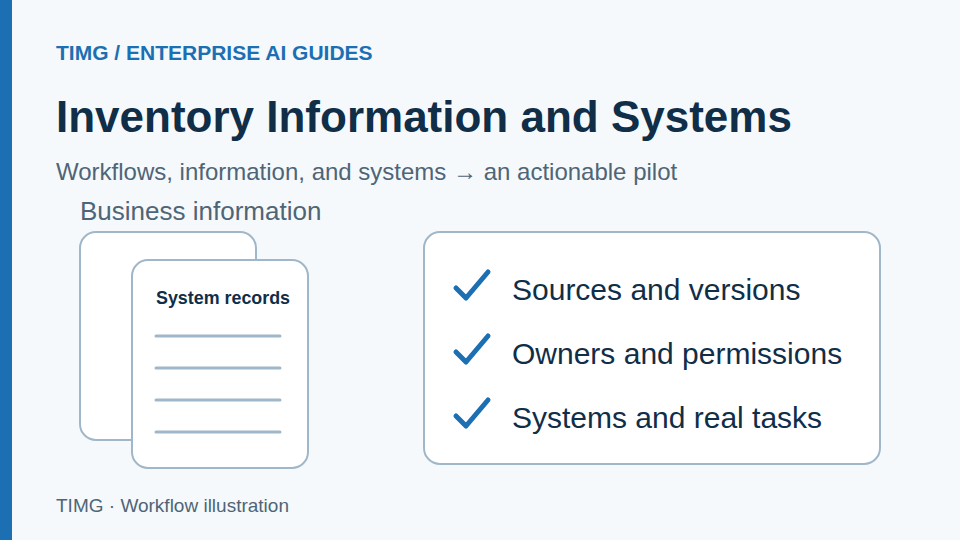
What Business Information and Systems Should You Inventory Before Implementing AI?
Bring workflows, information, permissions, and acceptance criteria into one checklist so the first AI pilot has real inputs, clear boundaries, and verifiable results.
Read article