
Establish authoritative sources for knowledge
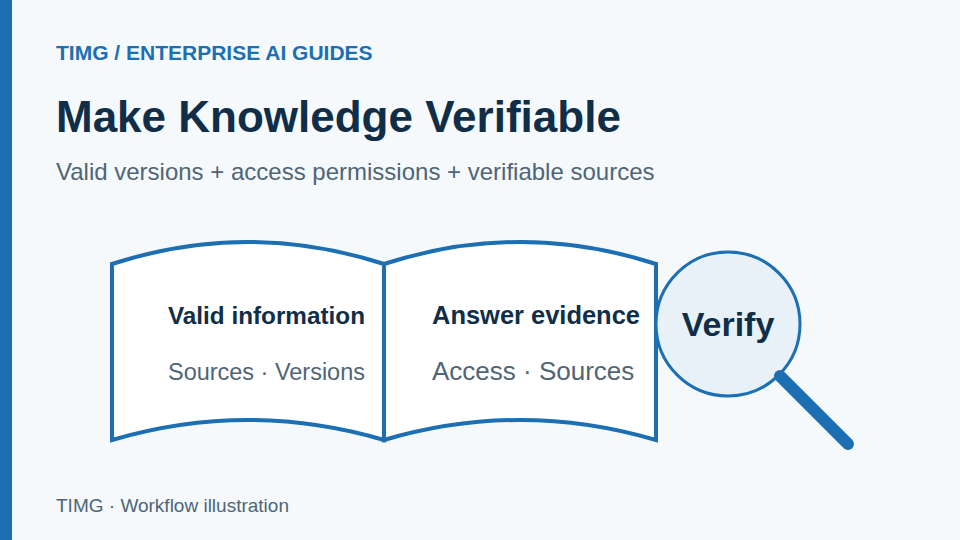
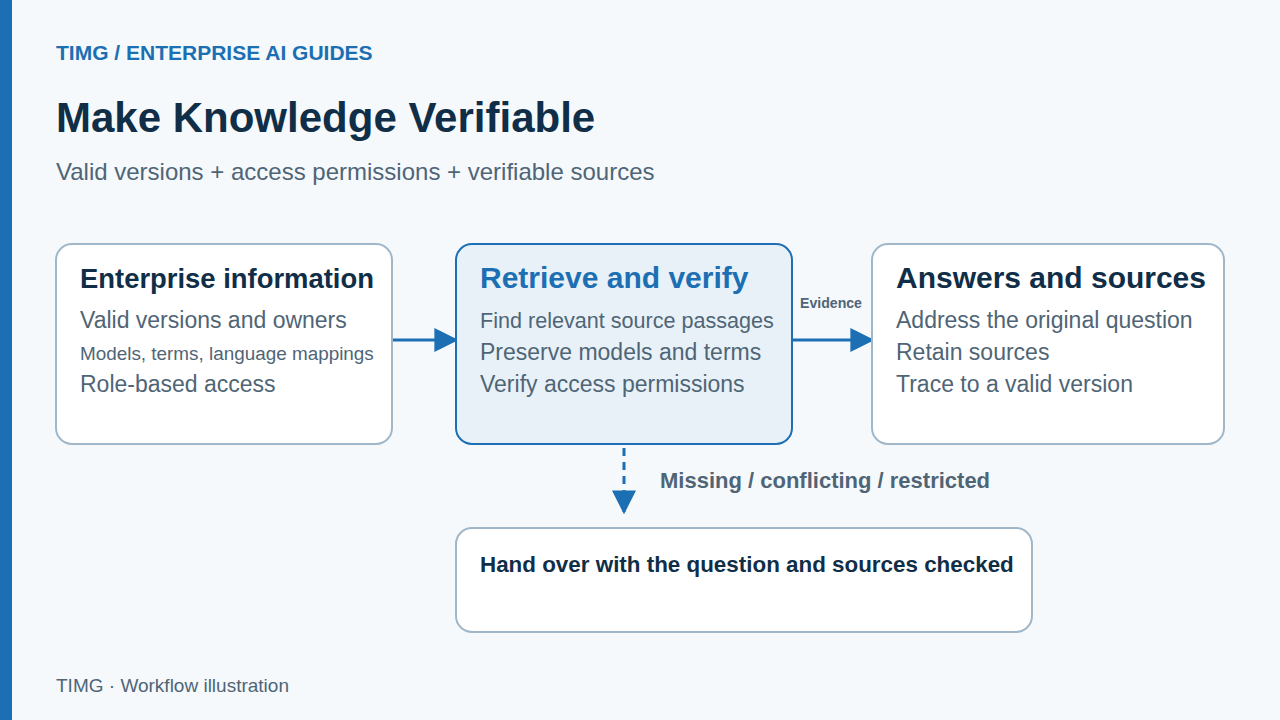
List the information needed to answer questions and identify valid versions first. An enterprise knowledge base is more than a collection of files: users should be able to determine which information supports the current answer.
- Retain sources and update dates
- Assign information owners
- Make retired content identifiable
Standardize terminology while preserving original specifications
Models, units, product parameters, and business terms need consistent mappings. Translation can aid understanding, but does not justify changing specifications or creating commitments without authorization.
- Keep model numbers and identifiers unchanged
- State the basis for unit conversions
- Refer unmatched terms for human confirmation
Make access permissions follow the information
Product descriptions available to customer service staff and pricing terms restricted to business owners should not share the same access scope. Both retrieval and answers must respect the user's permissions.
- Define visible content by role
- Distinguish public from internal information
- Test behavior when permissions are insufficient
Lighting export example: answering product questions
For lighting inquiries in different languages, the application can use valid catalogs to organize models, light sources, and installation parameters. Missing certification, customization, or lead time information should prompt confirmation rather than inference from similar products.
For example, if the Chinese catalog and English brochure list different dimensions, the model should not choose whichever value seems plausible. Give both versions and the discrepancy to the information owner first. After approval, update the relevant language indexes and retest with questions in Chinese and English.
- Answer using valid catalogs
- Cite the source for the relevant product
- Hand over with context when uncertain
Validate the knowledge base with real questions
Collect questions actually asked by employees and customers, and test missing answers, conflicting information, and unauthorized access. Continue maintaining information and reviewing answer quality after launch.
- Check that citations support the answer
- Record unanswered questions and conflicts
- Establish retesting after information updates
Validate with a set of cross-language questions
Prepare the following materials and review each item with the business owner. The specific fields and criteria should reflect the workflow you select.
- Link each product to its authoritative original, language versions, model, and applicable market.
- Create mappings for key terms and units; do not present unconfirmed translations or conversions as facts.
- Ask the same question in different languages to compare answers and citations, then test outdated-version conflicts and missing answers.
- Use accounts for different roles to verify visibility, and retest after information updates or permission revocation.
Frequently asked questions
How should a knowledge base handle inconsistent parameters in Chinese originals and English materials?
First link the same product, version, and applicable market. Have the information owner confirm the authoritative source, checking model numbers, units, certification scope, and business terms separately. Flag unresolved differences as conflicts and send related questions for human confirmation. Synchronize approved new versions across languages and retest affected questions.
How do you verify both answer accuracy and that restricted information was not accessed?
Prepare questions with authoritative answers, no answers, outdated-version conflicts, and cross-permission issues, then ask them using accounts for different roles. Check whether answers match citations, whether restricted source text can be accessed, and whether unsupported questions produce handover records. Retest relevant questions after permission revocation and information updates to confirm the changes have taken effect.