
Identify who will take over before launch
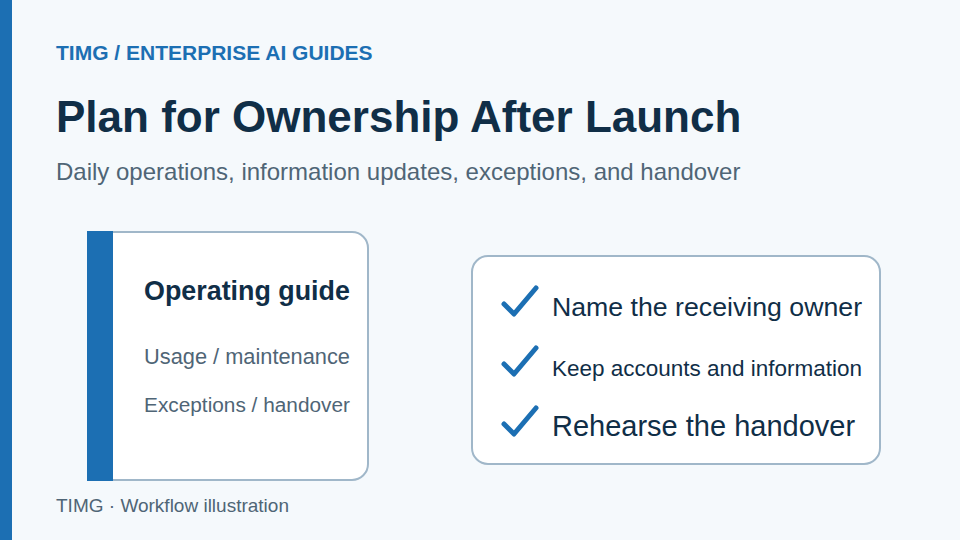
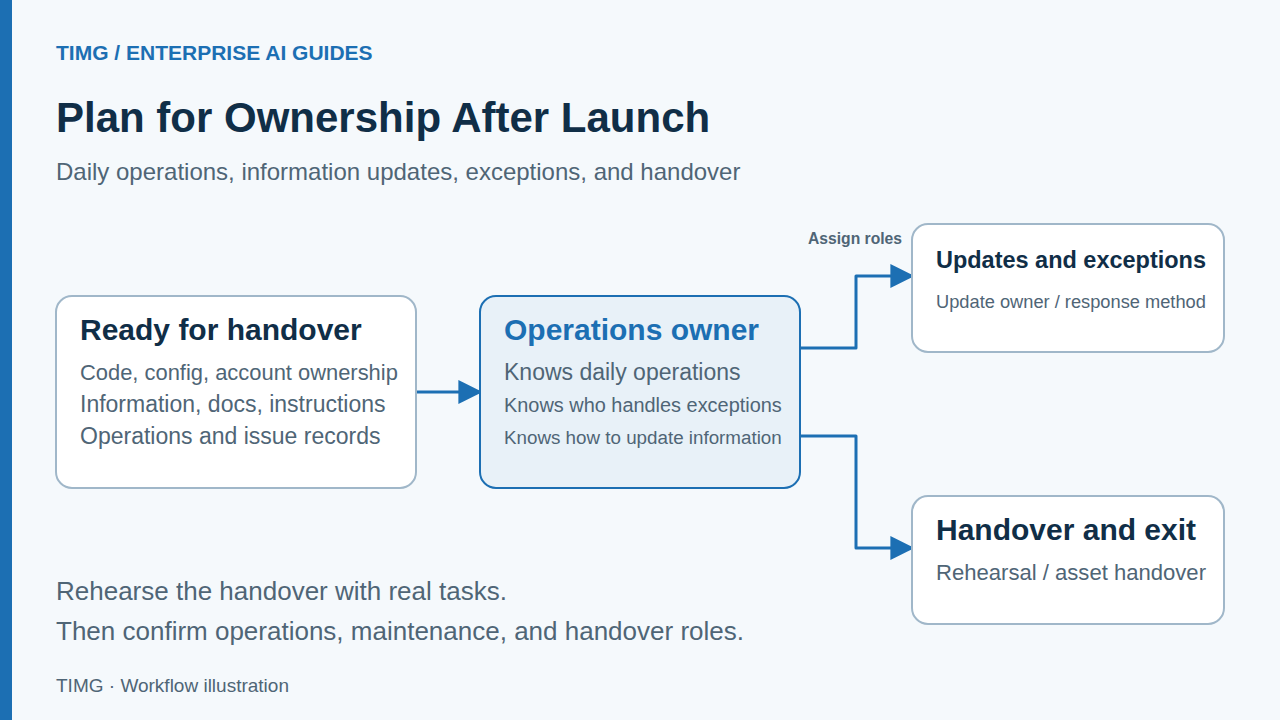
Business owners, end users, and technical maintainers have different responsibilities. Agree on who confirms results, handles system failures, updates information, and has authority to change the scope of automated actions.
- Document business and technical responsibilities separately
- Provide instructions for daily operations
- Specify the necessary accounts and permissions
Assign exception handling to named people
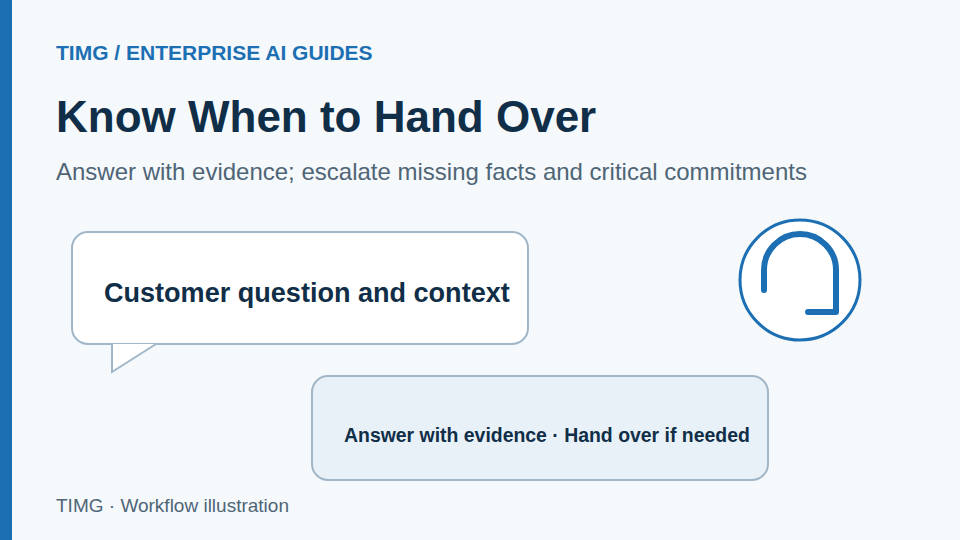
When a system is unavailable, information conflicts, or a task fails, the person taking over needs to know what happened, what the original task was, and which steps are complete. An exception should not end with an error message alone.
- Retain inputs and processing records
- Agree on notifications and takeover procedures
- Avoid blind retries that cause duplicate actions
Hand over assets that can be run and modified
Delivery includes configuration guidance, evaluation samples, information management procedures, and operating documentation as well as code. For external services, clarify ownership, costs, and migration conditions.
- Clarify ownership of code, accounts, and data
- Retain acceptance samples and results
- Document recovery, migration, and change procedures
Lighting export example: maintaining the quotation workflow
Product catalogs, pricing terms, and supply chain lead times change. After information is updated, verify that inquiry recognition, quotation drafts, and human approval still follow the rules, rather than merely checking that the application opens.
For example, after updating a price list, use an inquiry from the original acceptance tests to regenerate a quotation draft. Check the new pricing basis, approver, and version awaiting dispatch. If an existing task still references the old list, stop sending it and ask the salesperson to reconfirm it.
- Have the information owner maintain the valid version
- Retest representative tasks after rule changes
- Make sure salespeople know how to pause and take over
Agree on ongoing support or an exit arrangement
The enterprise may choose ongoing operations support or hand over to an internal or another external team. Either way, define the scope, response responsibilities, handover materials, and acceptance process in advance.
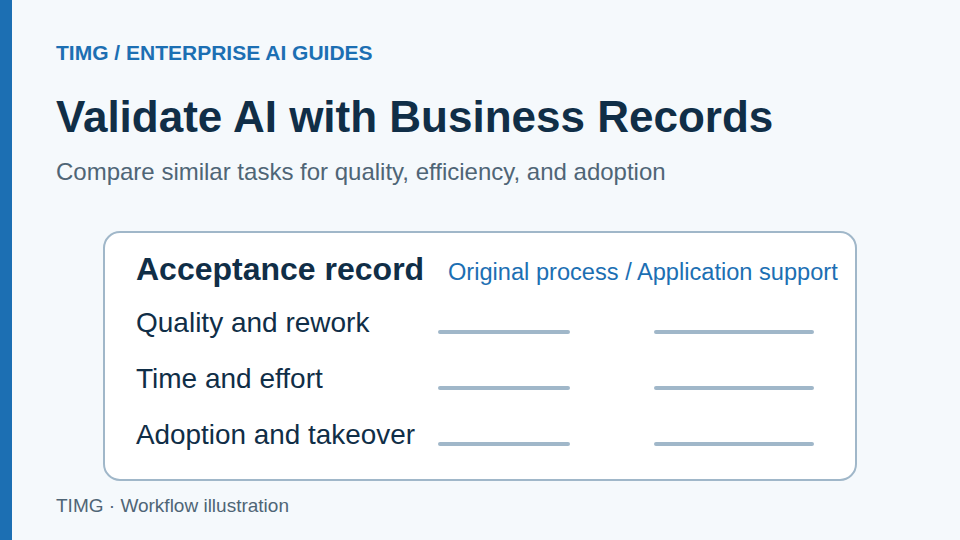
- Review quality, usage, and maintenance costs
- Define the service scope for ongoing support
- Verify that the receiving team can actually run the application
Rehearse the handover before completing it
Prepare the following materials and review each item with the business owner. The specific fields and criteria should reflect the workflow you select.
- Have the recipient update product information using the documentation and check that the application references the new version.
- Simulate an interface failure and confirm that the notified person can find the task ID, completed steps, and outstanding actions.
- Check ownership of accounts, information, and runtime configuration, then rehearse export and recovery as agreed.
- Record outstanding handover items, temporary workarounds, and the person responsible for completion; list third-party service costs separately.
Frequently asked questions
How can an enterprise without an engineering team verify that a delivery can genuinely be taken over?
Beyond a usable application, check accounts and permissions, runtime configuration, business rules, information update procedures, exception handling instructions, and acceptance samples. Have the actual owner follow the documentation to perform routine operations and rehearse an exception. Confirm whom to contact and how to recover, and agree on external support and maintenance fees.
What needs to be revalidated when changing models, system interfaces, or maintenance teams?
First identify the affected business activities, permissions, tool actions, output formats, and costs. Use existing acceptance samples to check the relevant paths and retain an option to restore the original configuration. During handover, review code and configuration, accounts, information, and outstanding work. When retiring an old service, confirm task status and arrangements for exporting, retaining, and deleting data.