
Separate questions it can answer from actions it can perform
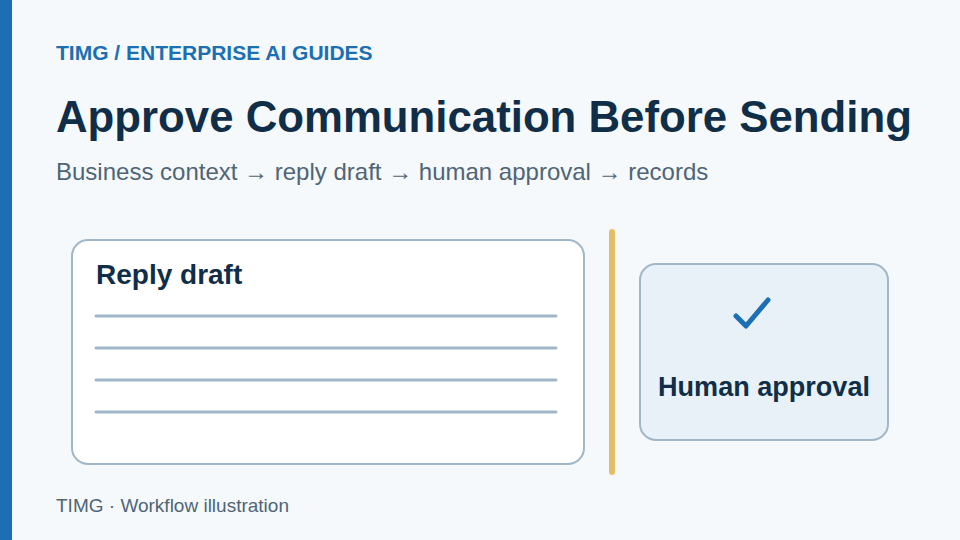
Explaining products, organizing requirements, and modifying orders involve different responsibilities. Define the scope of knowledge answers, suggested drafts, and system writes separately before deciding how much to automate.
- Knowledge answers need sources
- System actions need appropriate permissions
- Business owners confirm critical conditions
Ground knowledge in valid information
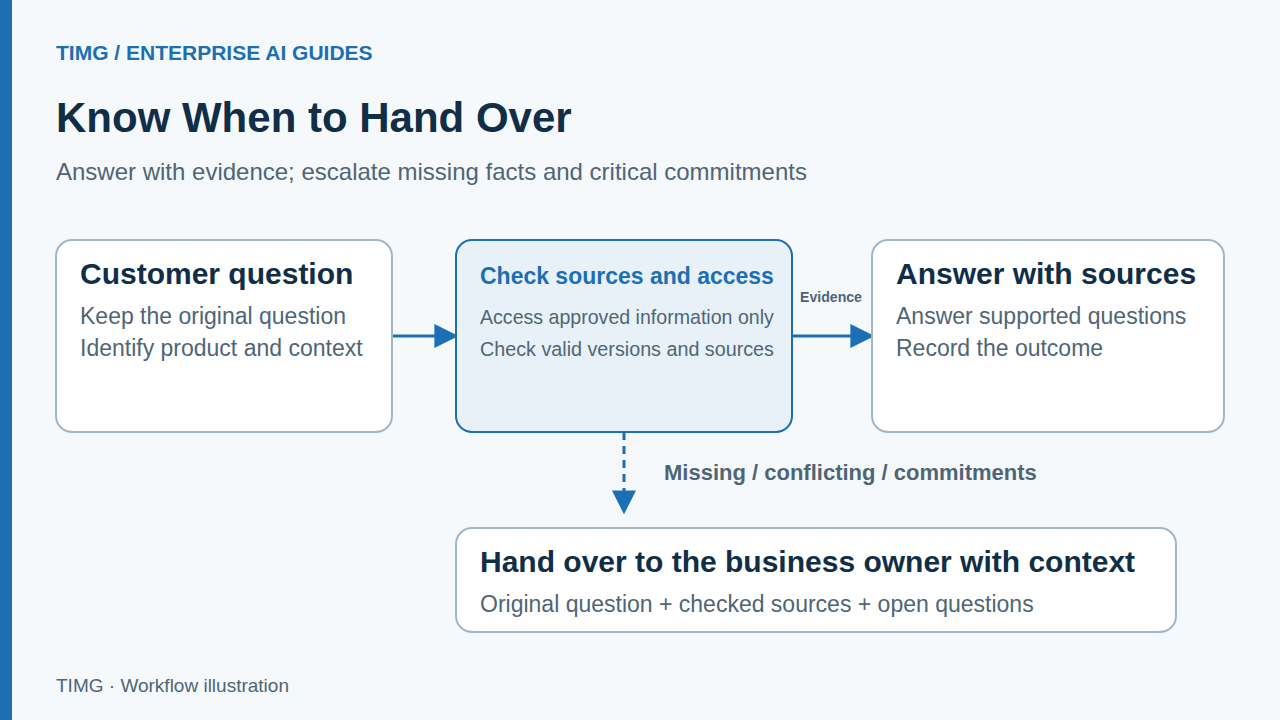
Answers should link to current product catalogs, business rules, and service descriptions. If information is missing or conflicting, or the customer's request exceeds scope, the application should explain that confirmation is required.
- Do not cite expired versions
- Do not fill factual gaps from similar cases
- Feed unanswered questions into information maintenance
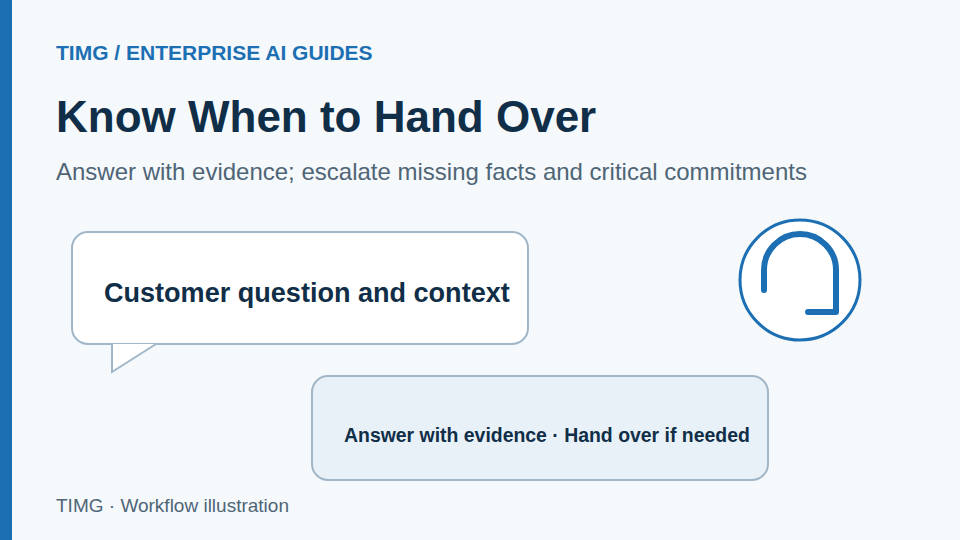
Include full context when handing over to a person
The person taking over needs the original question, confirmed information, steps the application has tried, and outstanding prerequisites. A bare request for human help often forces the user to ask everything again.
- The customer's original wording
- Information and records already checked
- Clear outstanding questions and an assigned owner
Lighting export example: multilingual purchasing inquiries
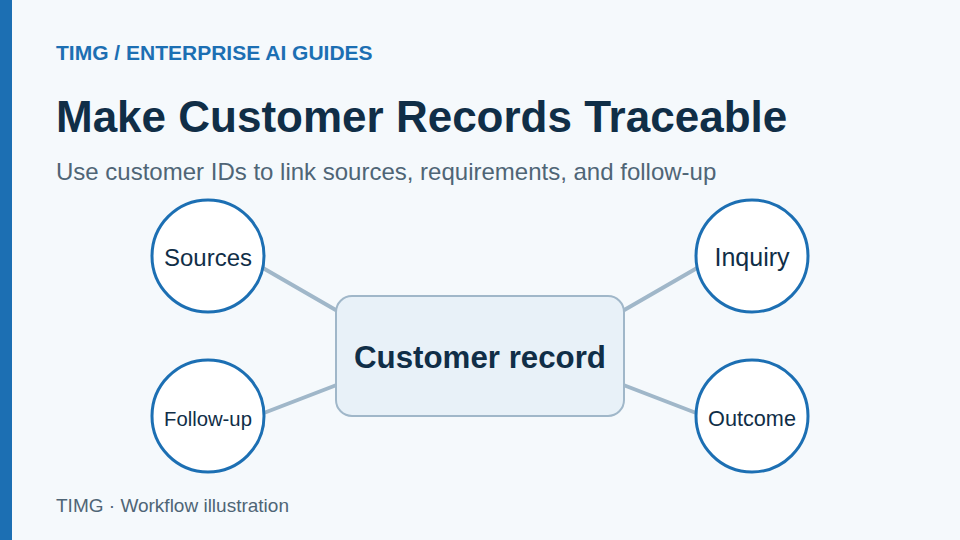
When a customer asks about lighting specifications and lead times, the application can organize the product, quantity, voltage, and color temperature. If the style is unclear or prices or lead times remain unconfirmed, hand over to a salesperson and link the outcome to the customer record.
An inquiry can produce four sections: known conditions, missing conditions, supporting sources, and next steps. After the salesperson confirms lead time, save the confirmed version and processing status. Pause automated replies in that conversation during human takeover to avoid sending contradictory terms to the customer.
- Leave uncertain parameters for verification
- Do not let the application decide quotation commitments
- Retain the outcome after the salesperson takes over
Include errors and exceptions in launch acceptance
Use real questions to test correct answers as well as missing information, unauthorized requests, system outages, and customer follow-up questions. Review quality, takeover workload, and feedback from actual use alongside response speed.
- Validate important questions with business samples
- Preserve traceable failure states
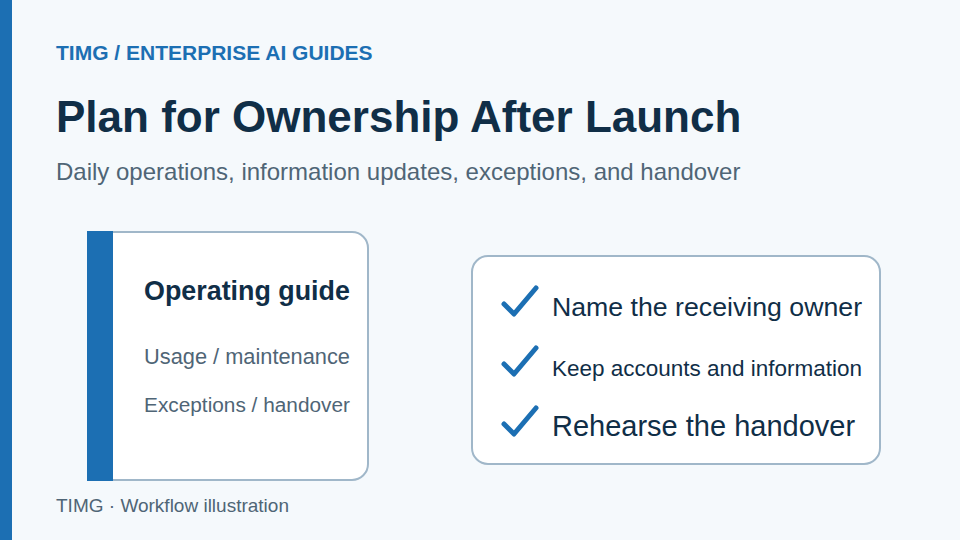
- Arrange ongoing maintenance and retesting
Prepare a service rules table before launch
Prepare the following materials and review each item with the business owner. The specific fields and criteria should reflect the workflow you select.
- List requests that may be answered directly, drafted only, or must go to a person, and identify supporting information.
- Define the recipient, handover content, and processing status for human escalation, including when automated replies may resume.
- Rehearse common questions, unanswered questions, conflicting parameters, complaints, and unauthorized requests individually.
- Record answer quality, manual edits, handover completeness, and subsequent task outcomes separately.
Frequently asked questions
After human takeover, how do you avoid making the customer repeat themselves or having AI continue to reply?
Hand over the original conversation, customer information, sources checked, actions taken, and outstanding questions. Assign a recipient and record the status. Pause the relevant automated processing for that conversation after takeover. Once resolved, the business user decides whether to close the case, continue following up, or resume automated service, and saves the outcome to the customer record.
As customer service knowledge changes, how can you prevent repeated wrong answers to the same question?
Link an incorrect answer to the original question, the cited version, and the final human resolution. Distinguish missing information from retrieval errors and response-rule problems. After correction, add the question to regression samples and check similar questions and related products. Have the information owner confirm the update and continue monitoring similar feedback in production.