
Break content tasks into verifiable steps
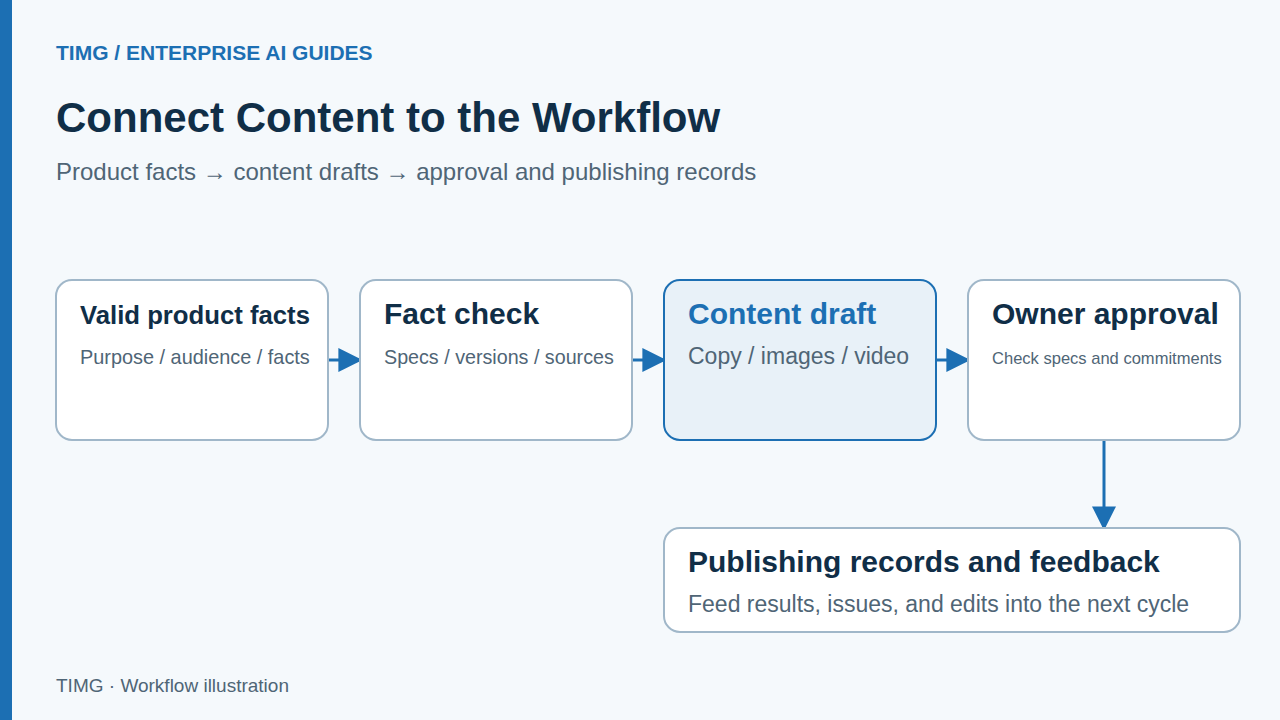
First define the audience, source information, and output format. Then separate material lookup, fact checking, drafting, approval, and record keeping. Each step needs clear completion criteria.
- Define the content's purpose and audience
- List factual sources and available materials
- Agree on who approves the content
Establish product facts before writing
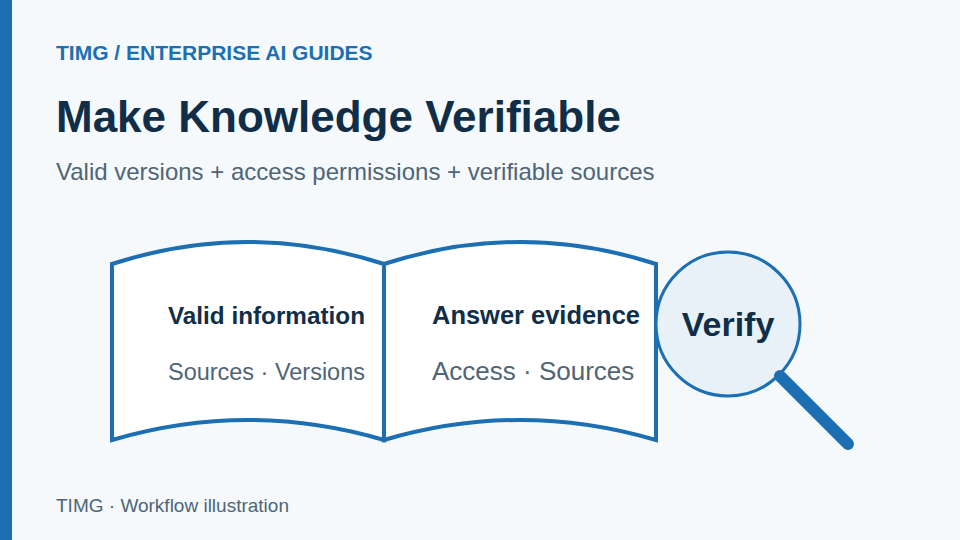
Copy must be grounded in valid product information. The application can adapt wording to different channels, but cannot alter specifications, add customer cases, or invent results to make the content more attractive.
- Match product parameters to the catalog
- Confirm permitted uses of customer information and materials
- Flag uncertain content separately
Connect approval and publishing
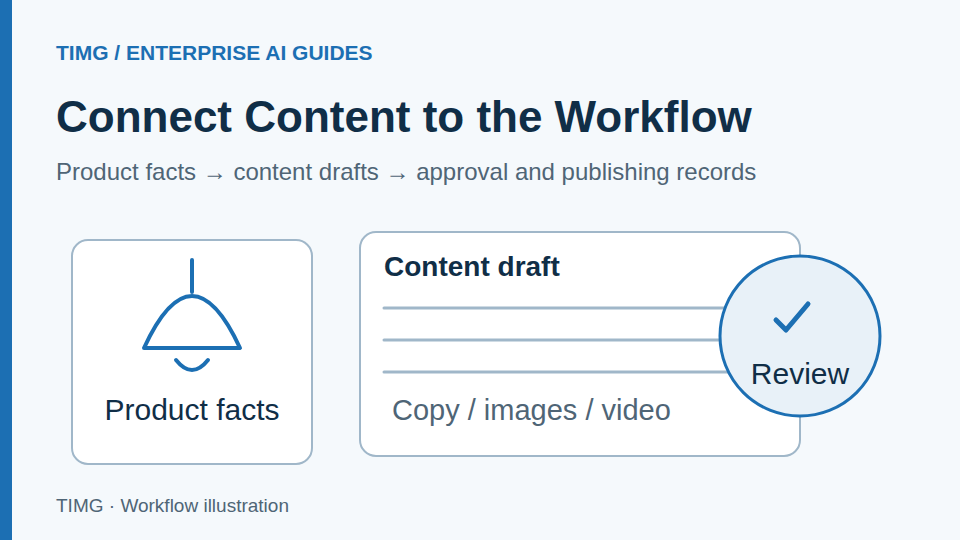
Send completed drafts to the owner for confirmation. Record the channels, published version, and failure handling to prevent duplicate publishing and conflicting versions.
- Approve content before taking external actions
- Record the materials and versions used
- Notify the owner after failure and preserve status
Lighting export example: content for a pendant light
The catalog, images, and installation instructions for one pendant light can support a website description, a short product video's description, and customer communication materials. Different formats share the same facts, while the owner confirms professional judgments.
For example, a Chinese product page and an English video description for the same pendant light should reference the same model and dimensions. When parameters change, flag all affected drafts. List the channels containing published content so the owner can decide whether to update or withdraw it.
- Use one valid set of product information as the basis
- Generate drafts for each use case
- Save approval and execution results back to the records
Improve continuously through actual usage feedback
Evaluate factual errors, rework, approval time, and usage first. Changes in inquiries or orders also depend on products, channels, and follow-up, and cannot be attributed entirely to AI.
- Record reasons for rework
- Distinguish process efficiency from business outcomes
- Adjust information and templates regularly
Complete the content workflow for one product first
Prepare the following materials and review each item with the business owner. The specific fields and criteria should reflect the workflow you select.
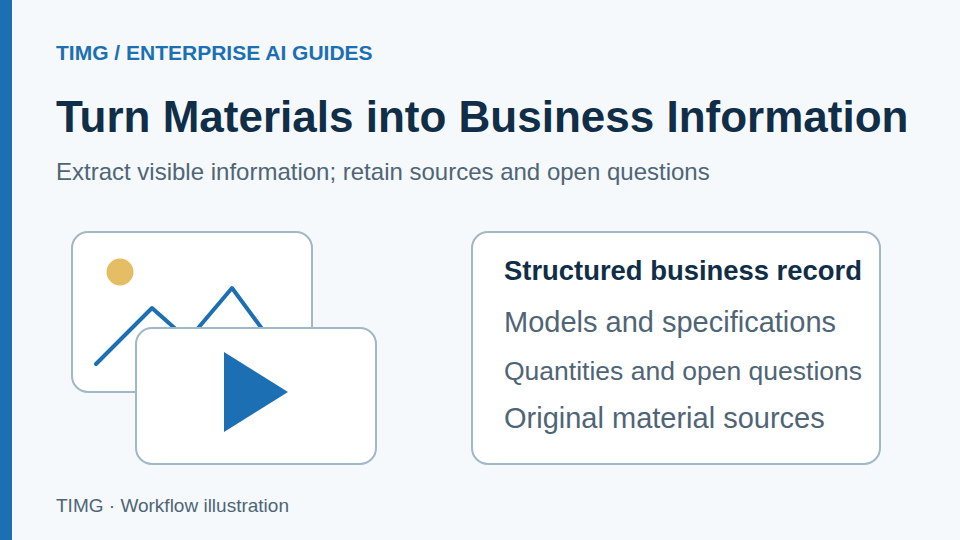
- Inputs should include the valid product catalog, usable materials, target language, and channel formatting requirements.
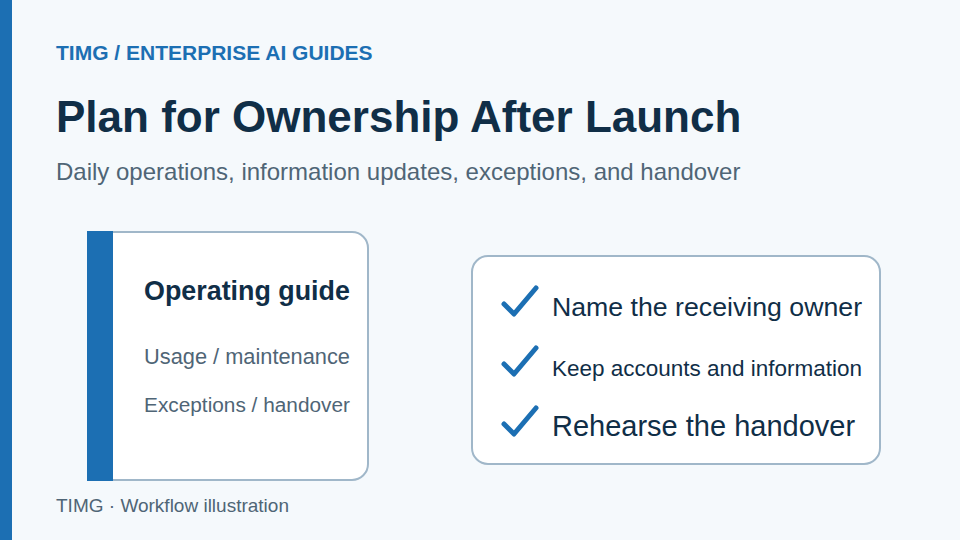
- Assign named owners for parameter checks, draft editing, approval, and publishing.
- Retain source versions, approved drafts, channel URLs, and publishing results so the impact of updates can be located.
- Evaluate the workflow through factual errors, manual rework, approval time, and actual adoption.
Frequently asked questions
Which content workflow steps can be automated, and which need review?
Information organization, specification references, drafting, and channel adaptation can be automated initially. Add checkpoints for product parameters, certifications, rights to case materials, and external commitments. Agree on publishing permissions and owners by channel; only approved versions enter the publishing queue. Pause related tasks when information expires or review rejects content, so old drafts do not continue through the workflow.
When product information changes, how should scheduled and published content be updated?
Preserve links among materials, product information versions, drafts, and channel publishing records. Identify affected pending drafts and schedules when information changes, and recheck them before publishing. Create an action list for already published content so the owner can choose corrections, withdrawal, or clarification, and record the actual outcome on each channel.