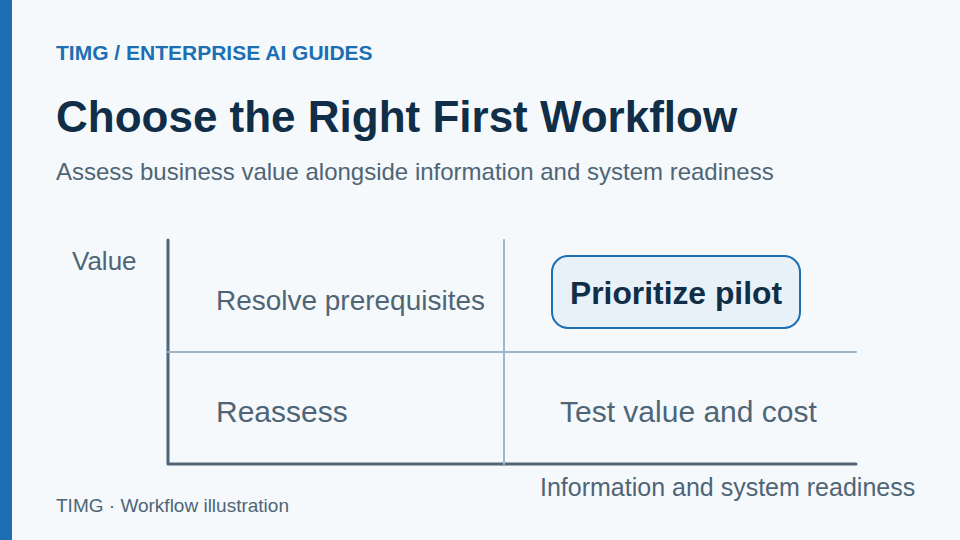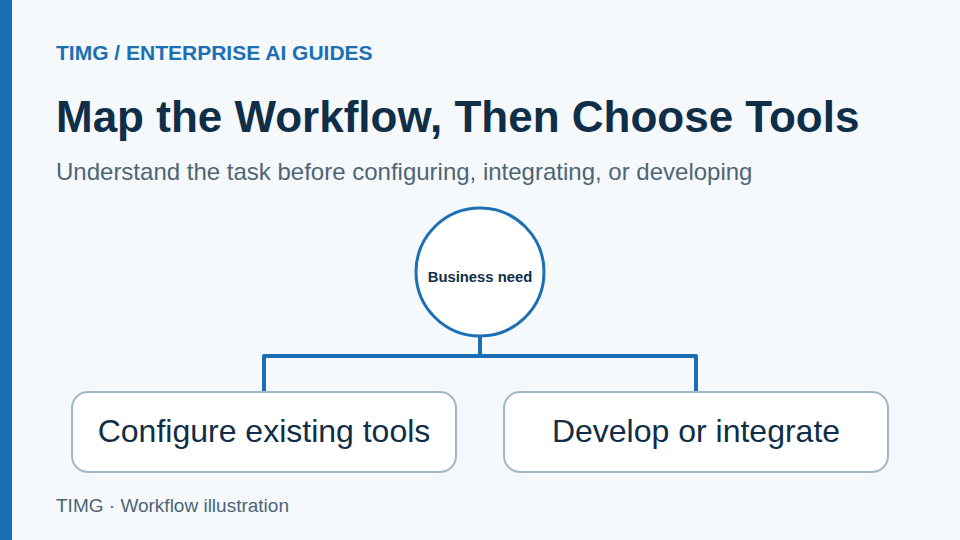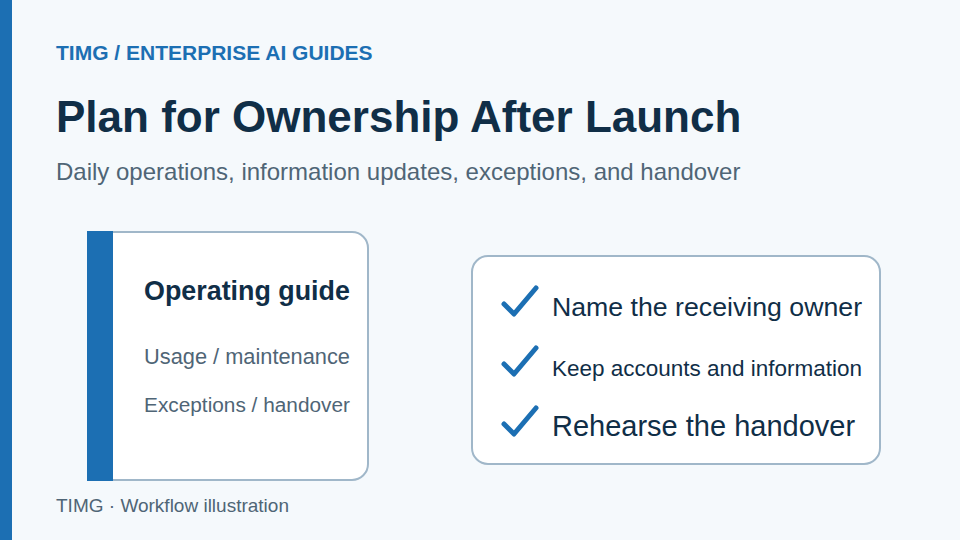

Start with a defined piece of work and a named owner
Begin with an actual user's working day: record how tasks arrive, the judgments involved, and who receives the result. Replace a broad goal such as improving efficiency with observable work, such as organizing purchasing inquiries for salesperson confirmation.
- Identify the business owner and actual users
- Record repetitive work and steps prone to omissions
- Choose a starting point with a manageable scope
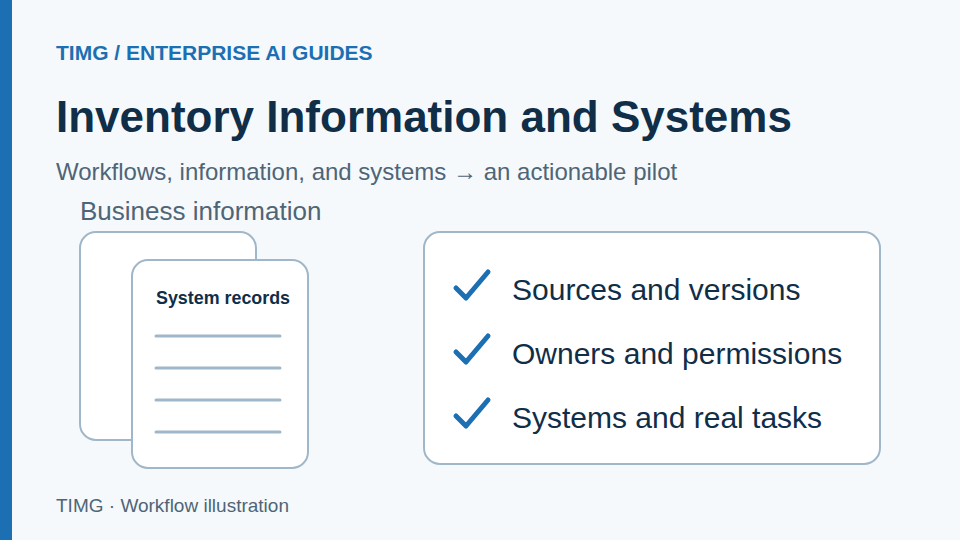
Inventory information and its sources
Product catalogs, emails, operating instructions, and historical records may exist in several versions at once. Before connecting them, confirm which version is valid, who maintains it, and which content is restricted to particular roles.
- Label information versions and owners
- Use representative samples of routine tasks and exceptions
- Do not treat unverified information as fact
Understand what the systems can provide
List what current email, CRM, ERP, and collaboration tools can read and write. Read-only queries, draft generation, and changes to official records are different permissions and should be agreed individually.
- Assess existing interfaces and import methods first
- Distinguish test records from production records
- Prepare procedures for failures and duplicate writes
Lighting export example: from product information to inquiries
Images, model numbers, specifications, and pricing references for the same light need to be linked. If an inquiry lacks dimensions, wattage, or a desired lead time, the application should mark these as missing for salesperson confirmation, not fill them from similar products.
For example, link product images, catalogs, and pricing references by model, then check the products within the current pilot scope first. Mark catalog dimensions that are missing and restrict pricing information to authorized staff. Keep the customer's original email in the record so the salesperson can check extracted results against it.
- Use the valid catalog as the product reference
- Have the owner confirm prices and lead times
- Retain the original email source in requirement records
Turn the inventory into pilot acceptance criteria
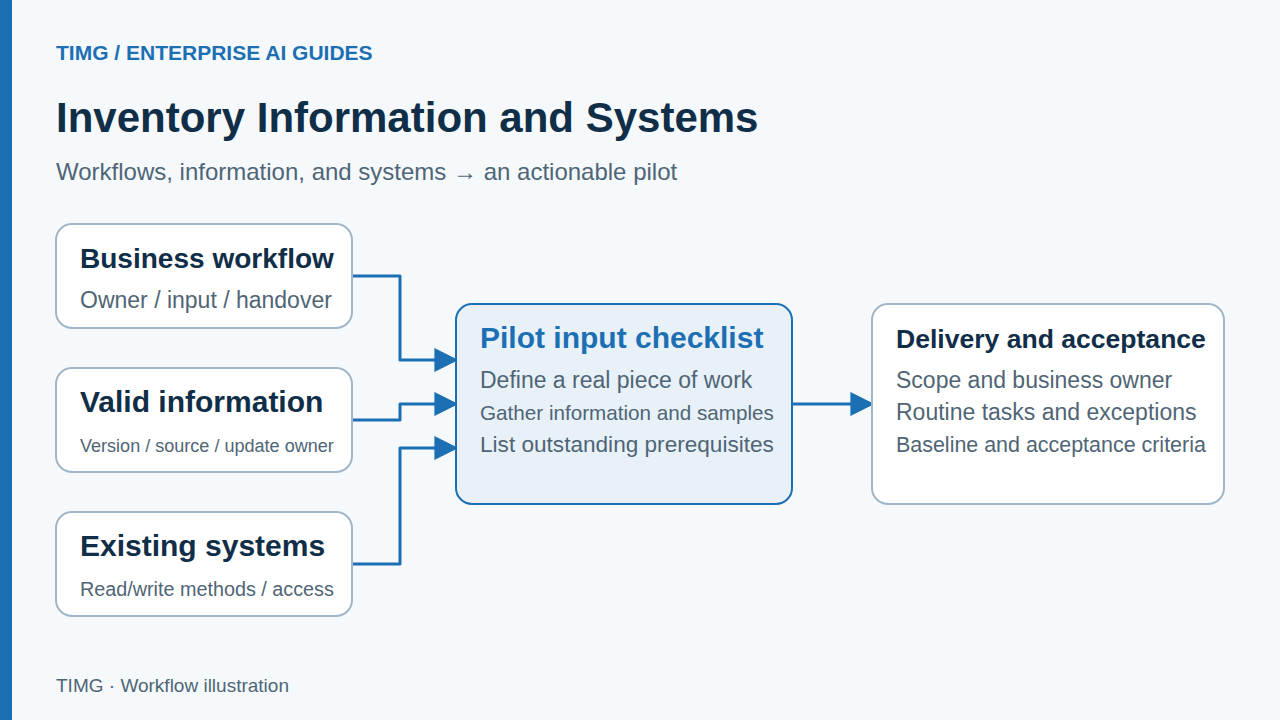
Before development, record the current handling method and time required. Then agree on pilot tasks, quality requirements, takeover procedures, and review frequency. The information inventory should produce materials that can be used directly in implementation.
- Input inventory and system boundaries
- Samples of routine and exceptional tasks
- Business baseline and acceptance criteria
Prepare a checklist the implementation team can use directly
Prepare the following materials and review each item with the business owner. The specific fields and criteria should reflect the workflow you select.
- Workflow inventory: initiators, processing steps, inputs and outputs, recipients, and confirmation points.
- Information inventory: sources, valid versions, sample fields, maintainers, and visibility.
- System inventory: available interfaces or import methods, read/write permissions, test environments, and execution limits.
- Acceptance inventory: routine and exceptional tasks, reference results, current handling times, and outstanding prerequisites.
Frequently asked questions
How do you know the information inventory is sufficient to start, rather than continuing to organize indefinitely?
Work backward from real tasks in the first workflow: can inputs be obtained, are critical fields present, are versions and usage permissions clear, and who receives the result? Divide gaps into prerequisites that must be resolved before launch and items that can improve during the trial. Run representative samples through the process once to create a clearly bounded pilot checklist.
If historical records are incomplete, how can the first phase establish a credible acceptance baseline?
Have business staff process a representative set of tasks using the current method, recording time, errors, rework, and handover outcomes. Then test the application under the same conditions. Measure routine tasks separately from exceptions such as missing information. State which business types the samples do not cover, avoiding department-wide benefit claims based on partial results.